


.svg)
.svg)

TOUCH HISTORY
Through vivid displays and authentic interactions
OVERVIEW
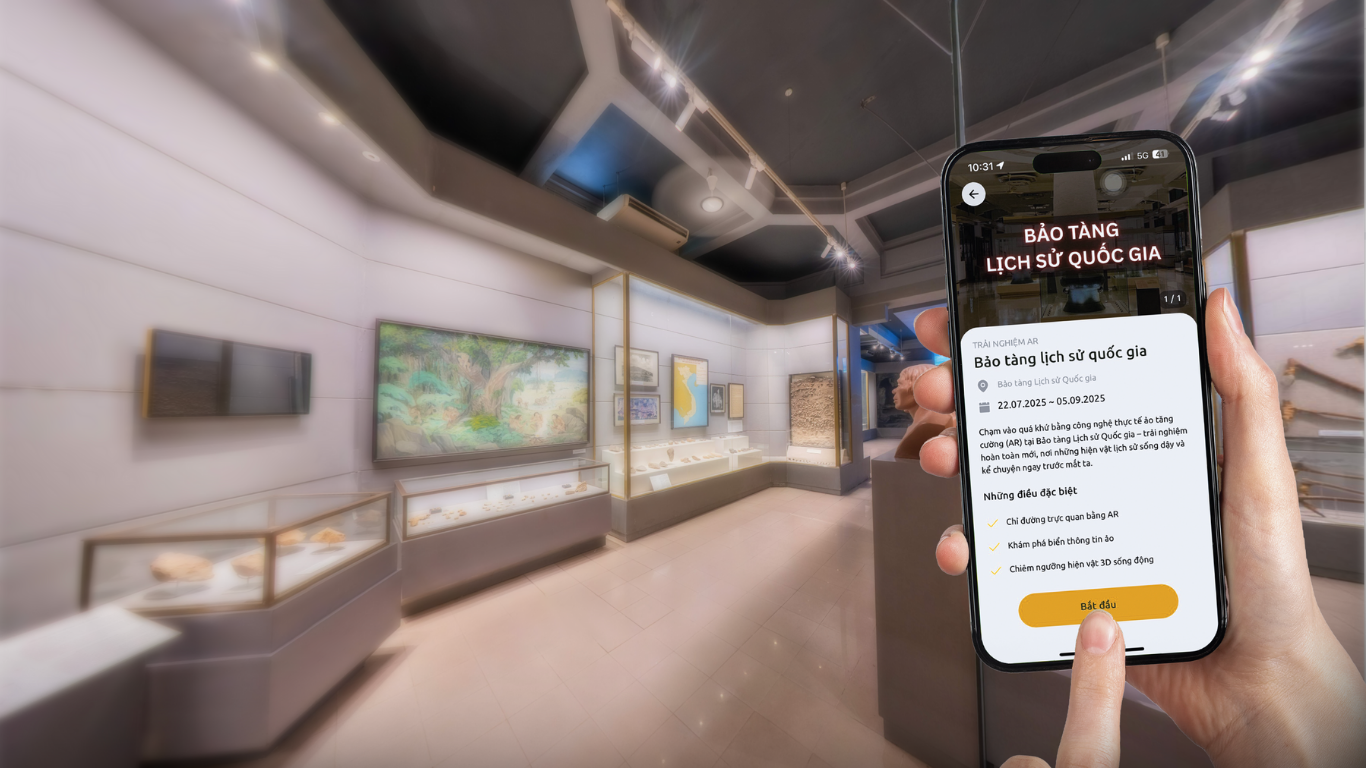
Applying AR and visual positioning technology in museums is not simply about modernization, but about rebuilding the way people connect with heritage.
This is the first project in Vietnam to fully integrate VPS, large-scale spatial mapping, fixed AR, and interactive content, demonstrating the potential of technology in refreshing cultural experiences - precise, engaging, and accessible.
HOW AR TECHNOLOGY TRANSFORMS THE MUSEUM EXPERIENCE
Vivid, Visual Artifact Display
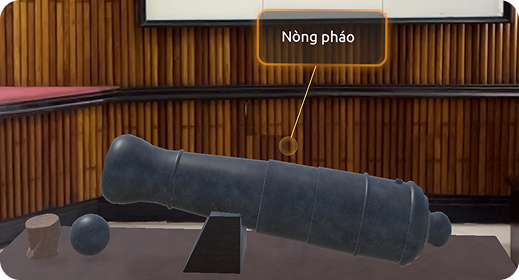
Museum artifacts are vividly reconstructed with 3D models, allowing viewers to see the complete version even if the actual artifact is damaged or missing parts. When viewed through a phone or screen, the artifact "comes to life" with simulations of the manufacturing process and ancient usage methods.
Stimulating Curiosity and Engagement with Young People
The museum experience becomes more engaging with artifact scavenger hunt games, puzzles, and mystery exploration. Visitors can also take photos with effects that transform them into historical characters and easily share their experiences on social media, helping increase interaction and attract young people.
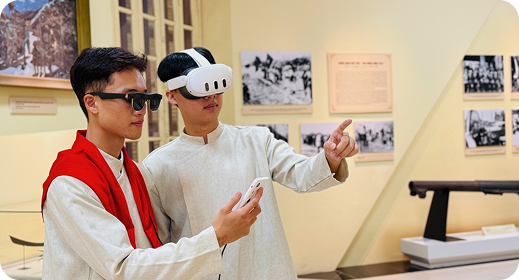
Personalized Tours
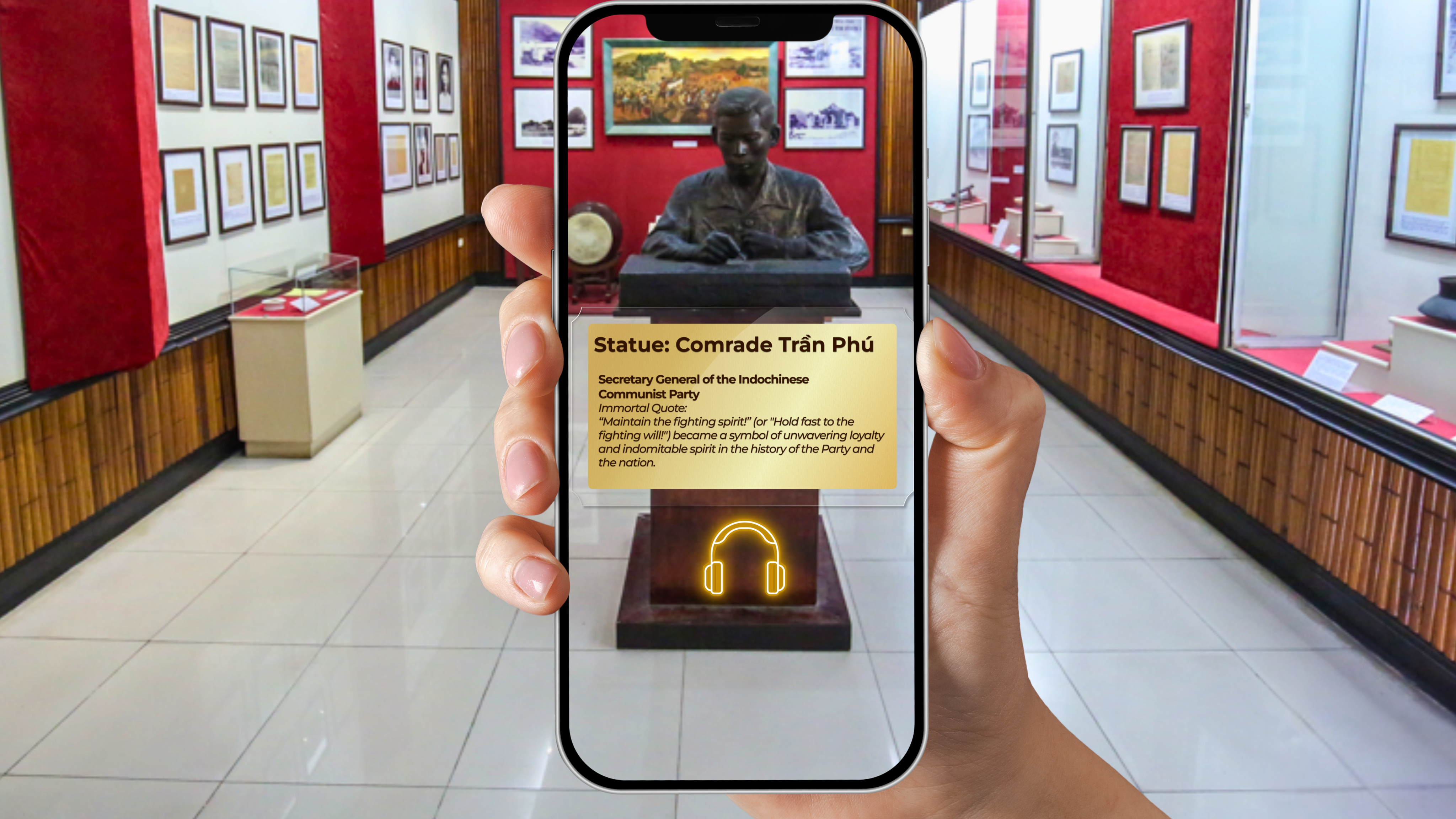
Each visitor will have their own journey: they can choose artifacts of interest, receive accurate directions to them, and view information through images, videos, or audio right on their personal device. Virtual guides - from historical characters to customizable voices - accompany in a way that suits each person, making the museum experience more approachable and tailored to needs.
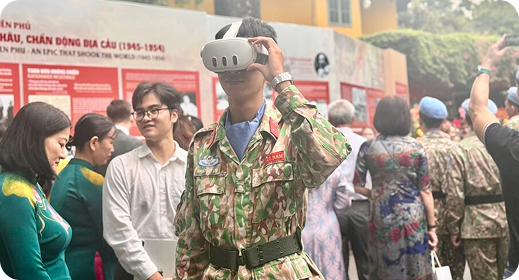
Expanding Exhibition Space
Digital technology helps museums display more precious artifacts without being limited by physical space. Viewers can explore artifacts in storage, international artifacts, or digital models supplemented alongside real artifacts - all displayed vividly on screens or mobile devices.
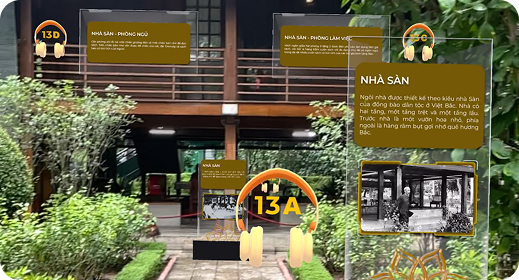
Increasing Educational, Communication and Revenue Efficiency
Museums can apply technology to create vibrant learning experiences for students, while producing attractive videos and images for social media communication. Technology experience packages like games, 3D models, and virtual guides help attract visitors and increase revenue. Additionally, museums can develop digital souvenirs like 3D photos or artifact reproduction videos.
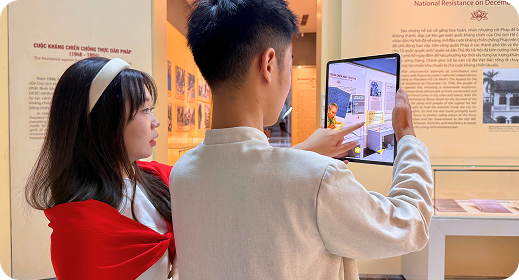
PIONEER PROJECT
VIETNAM NATIONAL MUSEUM OF HISTORY
With a campus area of over 50,000m², the Vietnam National Museum of History posed a significant challenge: how to enable visitors - especially young people - to freely explore while accessing historical information in a vivid, easy-to-absorb way, without the need for traditional guides or specialized equipment.
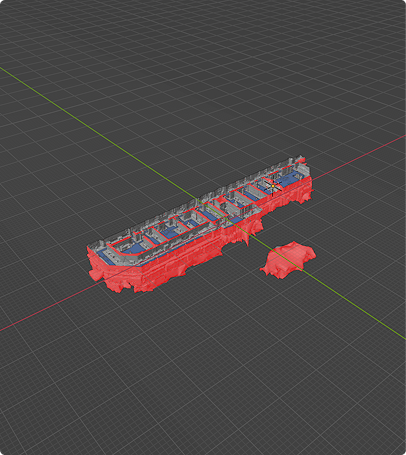
3D Digital Mapping
The system uses 360° cameras to scan over 50,000m² of the museum, creating point clouds and detailed 3D maps, enabling precise positioning at every location.
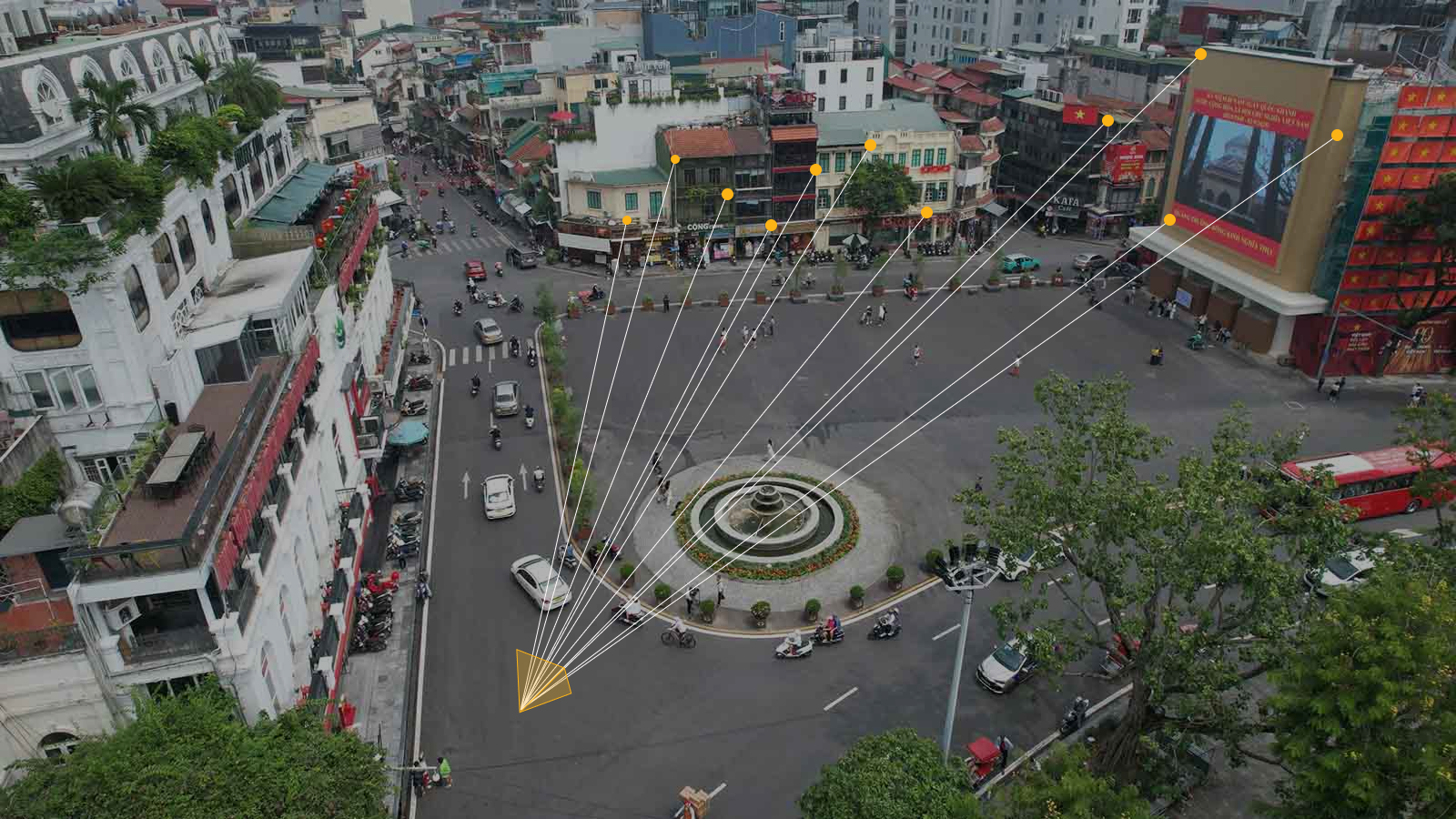
Visual Positioning (VPS)
VPS uses cameras to recognize space and compare it with 3D maps for precise indoor positioning.
.png)
Experience Content
AR content is anchored at exact artifact positions, allowing viewing of information, reconstruction videos, or 3D models right in real space.
Vietnamese Technology, International Standards – Leading the Spatial Computing Era
Let’s co-create digital experiences seamlessly anchored in the real world, powered by Vietnam’s most advanced spatial computing platform.
Contact